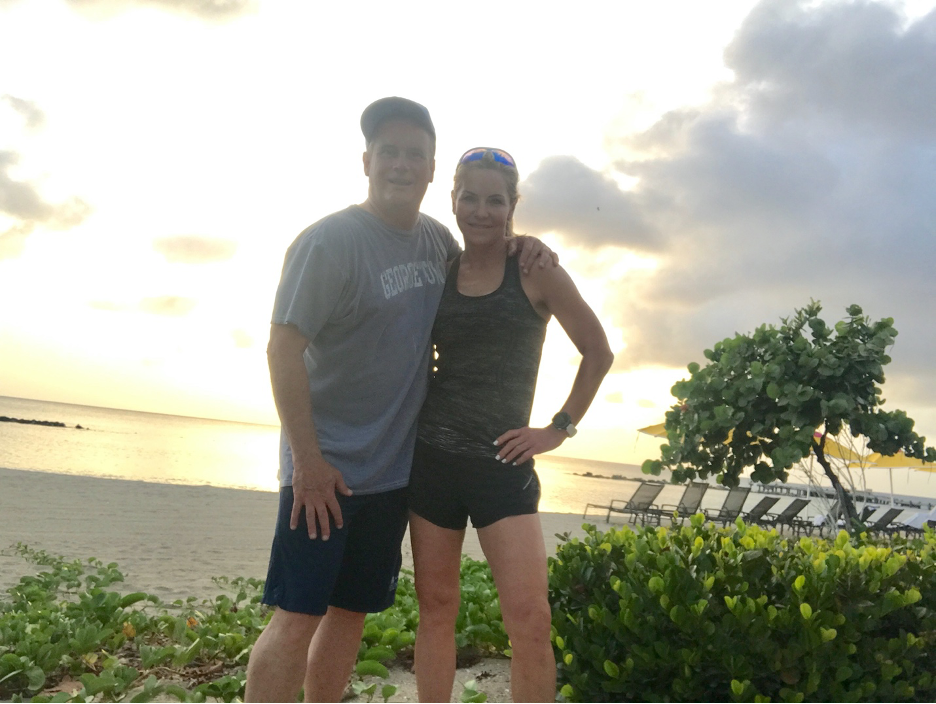
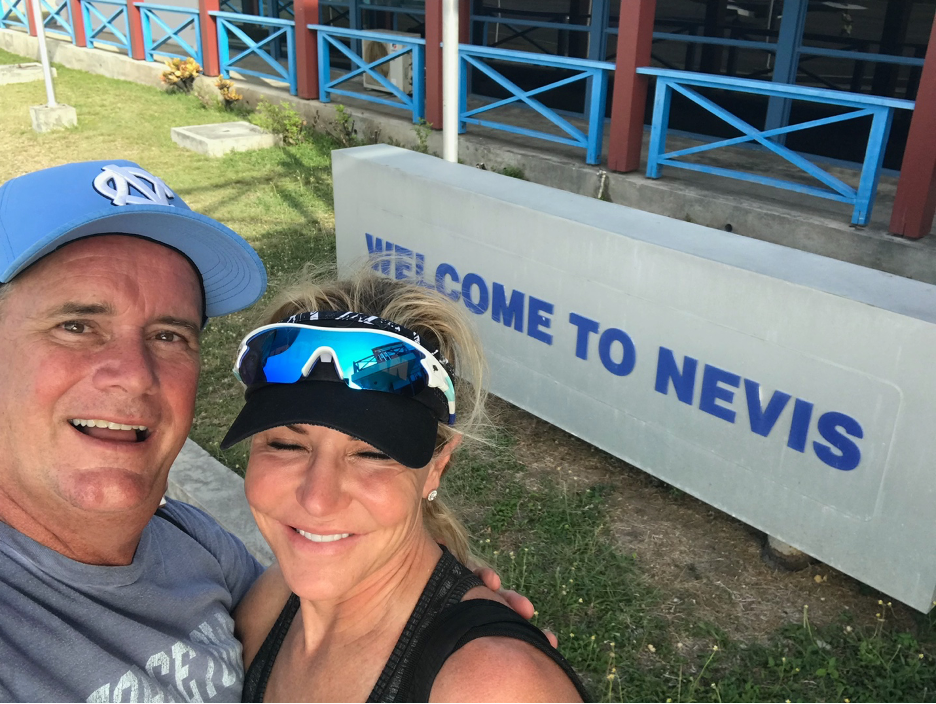
I had planned for Nevis (pronounced (Nee-vus) to be the final (193rd) country I’d visit, and have my family and friends join me for a celebration. However, entering Syria was virtually impossible (due to the war, poor relations with the U.S, etc) and therefore my wife and I visited Nevis in 2019. Flew into St. Kitts and then took a ferry across to our hotel on Nevis.
When we arrived, to our delight, we found very few tourists there.
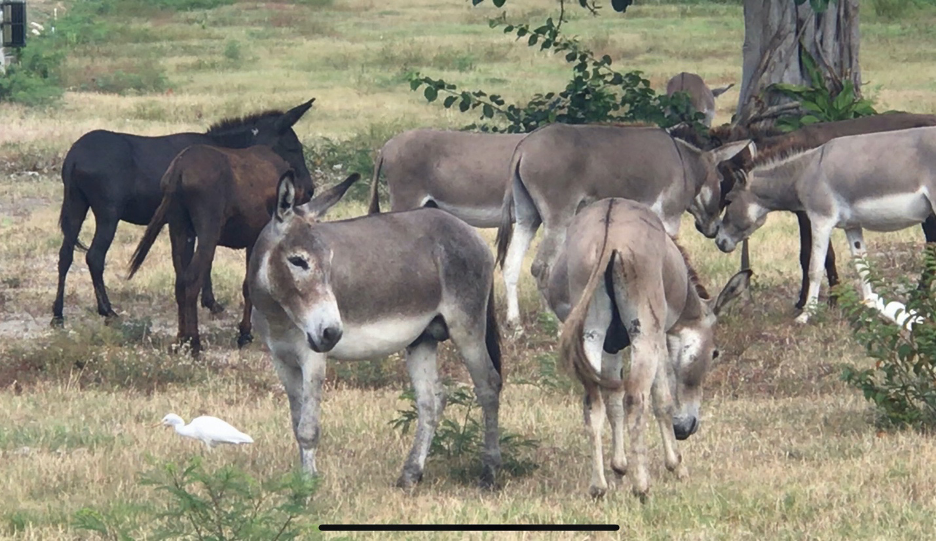
What we did see a lot of were donkeys, left on the island from its colonial past when sugar cane was grown on the island.
Nevis was the capital of the slave trade and produced more sugar cane than any other island in the Caribbean because the soils are so fertile here. Many of the people that currently live in Nevis are descendants of those slaves who used to work here.
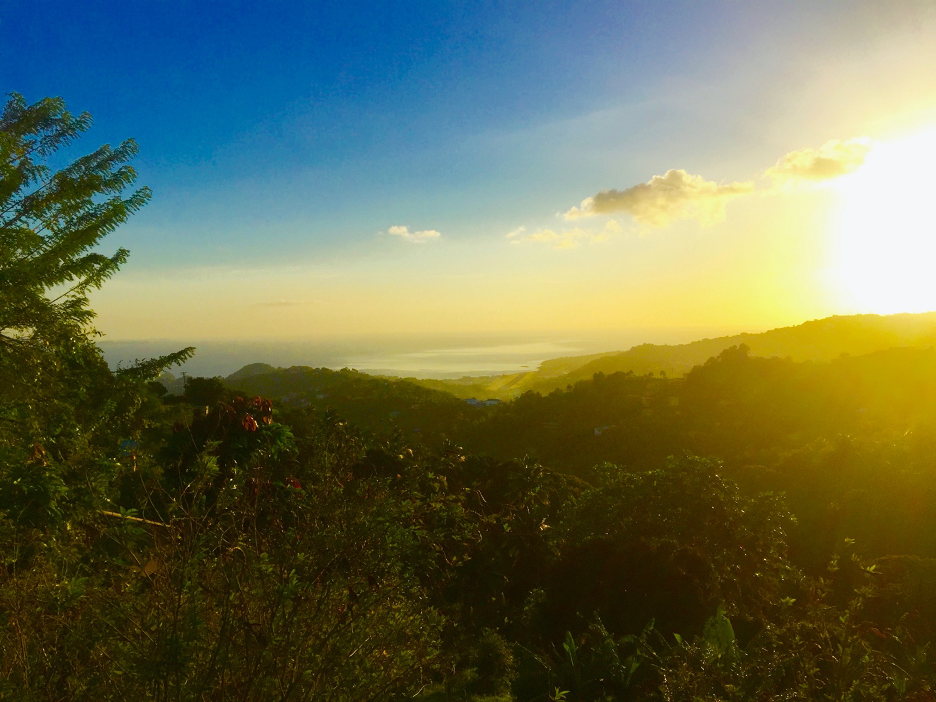
The Arawaks used to call Nevis “Oualie” translating to the land of beautiful waters … and they certainly got it right.
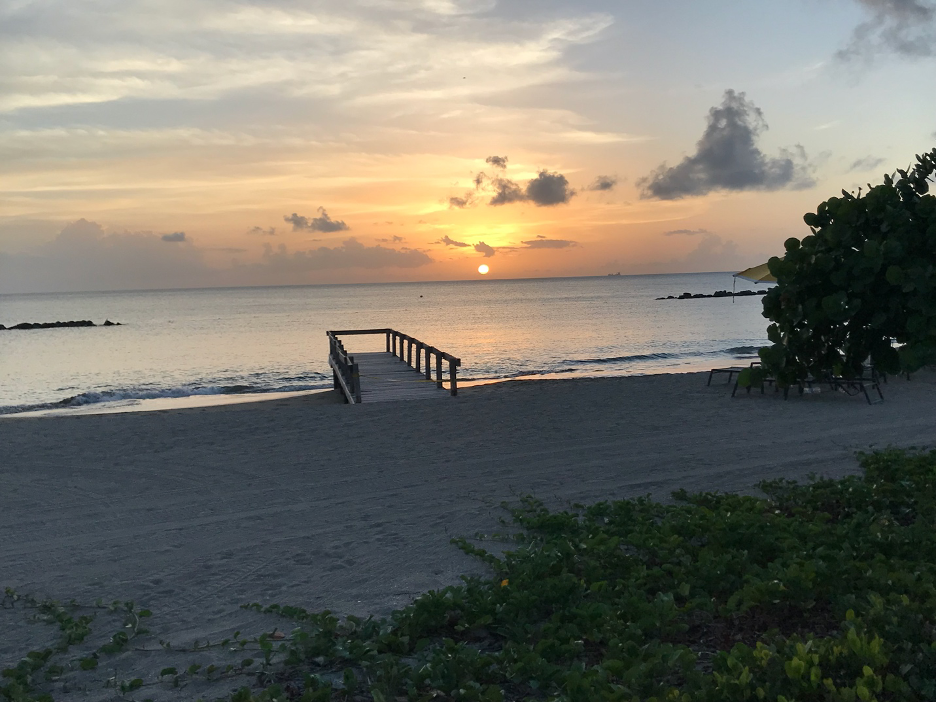
We loved our time in St. Kitts & Nevis!